

Best Roofing Materials for High Winds Replacement: Safeguarding Your Old East Dallas Investment
When the sky turns dark and the wind howls through your neighborhood in Old East Dallas, it’s more than just a dramatic weather event-it's a direct challenge to your property's structural integrity. For established homeowners whose houses are not only built with history but represent significant investments, storm damage can be profoundly stressful. Suddenly, what was a comforting, familiar structure becomes a source of deep worry: Is my roof truly safe?
It is absolutely natural to feel overwhelmed by the sheer magnitude of a storm's aftermath. When you see damaged materials or notice small signs of stress-a slightly discolored flashing, an area where granules have washed away prematurely-the immediate instinct is to find the fastest fix. But here at Rock Line Roofing, we understand that simply replacing visible damage with new shingles often addresses only the symptom, not the underlying disease. As I’ve spent decades inspecting roofs across Dallas, I’ve learned that the true secret to roofing longevity is always found in inspecting the details, not just looking at the finished surface. When considering the best materials for high winds replacement, we must look past the aesthetic and focus on systems designed to withstand massive uplift forces while preserving your home's unique Old East Dallas character.
When High Winds Damage Your Roof: What Matters Beyond Just Replacement
Before even discussing specific shingle types or metal gauges, it is crucial that we establish a foundational understanding of what storm damage truly entails. A hailstorm damages the surface; high winds, however, attack the attachment points and the structural envelope of your home. When we talk about "high wind roof repair Old East Dallas TX," we are talking about engineering principles, not just materials replacement.
Many homeowners approach a leak or visible damage with the mindset that they simply need new roofing material placed over the old one. While that is part of the process, focusing solely on the surface ignores the critical components underneath: the underlayment, the ventilation system, and the flashing-the joints where different building materials meet (chimneys, valleys, eaves).
Here’s where many premature repairs fail. If we only replace damaged shingles without first inspecting the entire flashing network or reinforcing compromised fascia boards, a subsequent high wind event will simply find those weak spots again, leading to accelerated failure and costly repeat repairs down the line. We must address these underlying structural weaknesses before any new material goes into place.
The decision process for selecting the best roofing materials for high winds replacement is therefore complex; it requires balancing three key factors:
- Structural Load: How much force (uplift, impact) must the roof endure?
- Aesthetics and Character: Does the solution complement the historic architectural style of your Old East Dallas neighborhood?
- Longevity & Resilience: Will this material last decades while providing maximum resistance to extreme weather?
The Science of Resilience: How Roofing Materials Withstand Extreme Uplift Forces
To truly understand why certain roofing materials are superior, we need to elevate the conversation from surface-level fixes to structural engineering. When a powerful wind hits your home, it rarely causes damage through direct impact alone. Instead, the most destructive force is uplift pressure.
Imagine the roof as a wing of an airplane: the wind doesn't just push down; it creates massive negative pressure differentials-it pulls up on everything attached to the structure. This uplift force is what tears materials and fasteners free from the building envelope. A proper roofing system must be designed specifically to resist this pulling action across its entire surface area.
This brings us to the technical heart of modern roofing: fastening and attachment. The best systems utilize specialized, corrosion-resistant coatings on screws and nails, but more importantly, they rely on engineered underlayments and strapping that are designed to distribute wind load evenly across the roof deck. This is where a quality assessment becomes non-negotiable; we must verify that the current structural support can handle the forces being applied.
Furthermore, it’s not enough for the material to be rigid or flexible in isolation. We must consider its interaction with the building's geometry. The pitch (angle) of your roof affects how wind flows over it. A proper system requires detailed attention to flashing around transitions-the areas where the vertical wall meets the horizontal roof, or where a chimney penetrates. These details are often overlooked but represent major points of vulnerability during severe weather events.
"The true secret to roofing longevity is always found in inspecting the details, not just looking at the finished surface."
-William Hayes
Premium Performance Choices: Metal Roofing vs. Architectural Shingles
When homeowners ask about best roofing materials for high winds replacement, they are usually weighing two primary options that offer dramatically different levels of resilience and aesthetic character: standing seam metal roofing and premium asphalt shingles. Both can be excellent, but they perform differently under extreme stress.
Standing Seam Metal Roofing: The Ultimate Defense
For maximum wind resistance and the longest lifespan, standing seam metal roofing is often considered the gold standard. Its structural rigidity is unmatched. Because the seams are factory-engineered to run vertically and are mechanically fastened in a continuous line, the material acts as one cohesive unit rather than individual pieces. This system distributes extreme uplift forces across the entire surface, making it exceptionally resistant to tearing or peeling even under hurricane-force winds.
For homes with historic character in Old East Dallas-like those found in Cedars or Oak Lawn-modern metal roofing is available in powder coatings that mimic slate tones, weathered copper, and traditional colors, ensuring both supreme protection and seamless aesthetic integration for reliable Flat Roofing in Old East Dallas, TX.
Premium Asphalt Shingles: Tradition Meets Modern Resilience
While metal offers unparalleled strength, some homes require the classic look of asphalt shingle roofing for historical reasons. However, modern asphalt shingles designed for impact resistance are far superior to older models. The key difference lies not just in the granule composition (which provides ballast) but in the quality and thickness of the underlying matting and adhesion layers.
These high-grade shingles are engineered with enhanced adhesion chemicals that allow them to hold down better against negative pressure differentials created by strong winds. They provide a familiar, traditional aesthetic while still offering robust protection when paired with an updated underlayment system.
| Feature | Standing Seam Metal Roofing | Premium Asphalt Shingles |
|---|---|---|
| Wind Resilience | Superior (Continuous structural unit) | Excellent (Requires high-grade adhesion/underlayment) |
| Lifespan | 40-70+ years | 25-35 years |
| Aesthetics | Modern, Industrial, or Historic Mimicry | Traditional, Familiar Look |
| Maintenance | Low (Inspection mainly required) | Moderate (Granule loss over time) |
Ultimately, the choice is a tailored one: if maximum structural peace of mind and minimum maintenance are paramount, metal excels. If traditional aesthetics must take precedence while still demanding high resilience, premium asphalt is a highly viable option-provided we upgrade all underlying components simultaneously.
Modern Resilience Solutions: TPO and Impact-Resistant Systems
Our expertise extends beyond pitched roofs and traditional materials. We understand that even within an Old East Dallas neighborhood, architectural complexity can introduce different roofing needs. Consider flat sections for additions, patios, or specific commercial segments.
Understanding Flat Roofing Needs (TPO/Modified Bitumen)
For flat areas, the best solution is often TPO (Thermoplastic Polyolefin) or modified bitumen systems. Unlike traditional materials that are prone to seam failure under stress, modern TPO roofing utilizes a continuous seam welding method. This process creates a monolithic, wind-resistant barrier that eliminates weak points and significantly enhances its ability to resist uplift forces-a critical factor during high winds.
The Role of Impact Resistance
When we speak about "impact resistant roofing materials," the definition is broad. It means resistance not only to hailstones but also to repeated stress from debris (such as branches or siding elements) that are flung by strong winds. This requires selecting materials with a proven structural depth and adhesion rating, ensuring they don't peel or chip easily under dynamic force.
Integrated Flashing and Sealing: The Unsung Heroes
I must reiterate this point enough: the best material in the world will fail if the flashing is compromised. We dedicate significant time to meticulous sealing techniques around all penetrations-vents, gutters, and walls. This involves using modern, flexible membranes that can accommodate slight structural shifts over decades of temperature fluctuation, maintaining a perfect seal against water intrusion even during intense weather events.
Addressing Ventilation
Finally, no discussion of resilience is complete without discussing attic ventilation. Proper intake (soffit vents) and exhaust (ridge vents) are vital because they manage the air pressure within your roof assembly. By allowing air to flow freely, we reduce temperature extremes and prevent the buildup of excessive structural stress caused by fluctuating weather conditions-a critical component that supports any chosen roofing material.
Beyond the Material: The Critical Assessment Process Before Installation
This is arguably the most important section for protecting your investment. Choosing the best materials only makes sense after a thorough, detailed professional assessment has occurred. It’s not about selling you something; it's about giving you an honest blueprint of what needs to be fixed.
The Importance of a Detailed Inspection
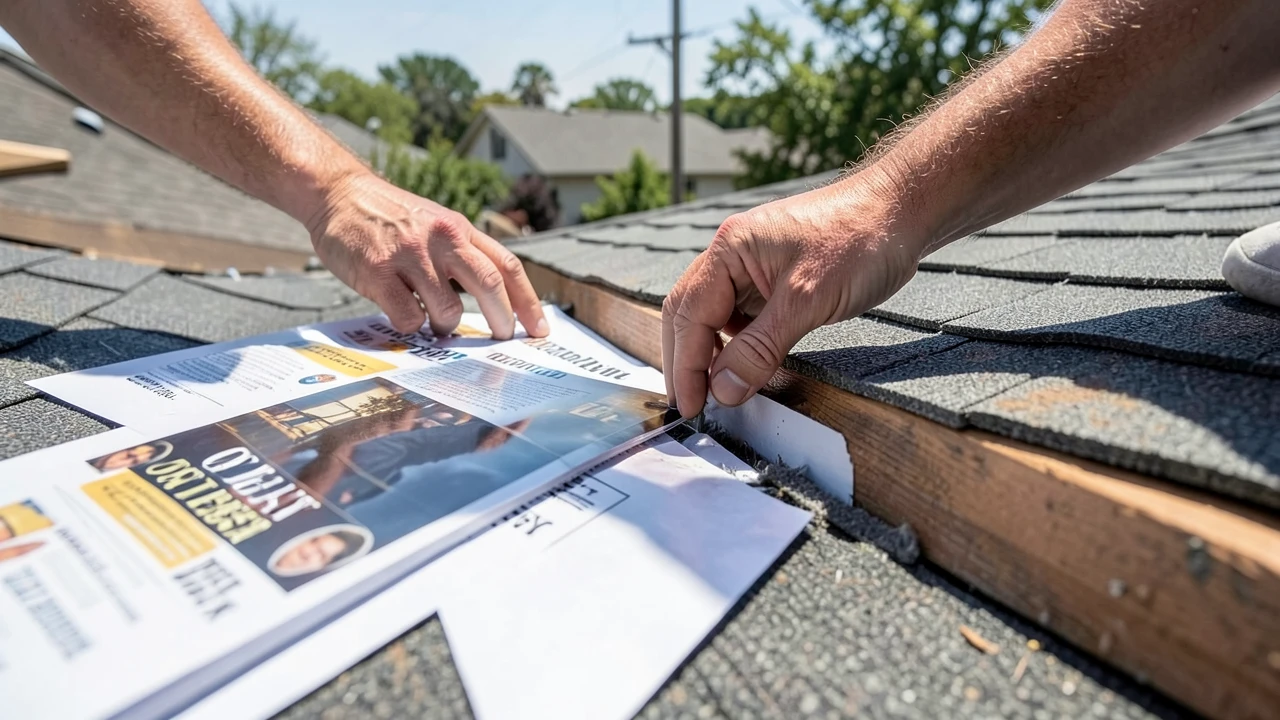
Before we even talk pricing, our priority is structural integrity. A true inspection must identify hidden rot in compromised fascia boards, poorly installed drainage elements, or flashing failures that are invisible from the ground. We look at how water travels through the system over time, not just where it appears to leak today. This detailed assessment ensures that when we recommend a material-be it slate, metal, or premium asphalt-it is paired with a structurally sound foundation.
Demystifying the Scope Creep
Many homeowners hesitate because they worry about "scope creep"-the fear of an inflated price tag for unnecessary repairs. We proactively address this by providing a comprehensive Assessment Report. This report details exactly what needs fixing (e.g., replacing three feet of compromised flashing) versus what is purely cosmetic (e.g., minor granule loss). Our goal is transparency, ensuring you understand precisely where your money is going and protecting you from unnecessary upselling.
The Warranty Deep Dive
When reviewing warranties, don't just look at the material guarantee. A truly comprehensive warranty must cover three elements: materials, labor, and crucially, workmanship. We guide our clients toward solid, multi-faceted guarantees that provide peace of mind for a minimum of 10 years or more.
Safeguarding Your Home’s Value: Starting with a Clear Assessment
Selecting the best roofing materials for high winds replacement is never a generic decision; it is always an intensely tailored strategy-a blend of historical aesthetics, required structural performance (wind/impact), and your long-term financial goals. We approach this not as a transaction, but as a partnership dedicated to safeguarding your investment in Old East Dallas.
We know that major roofing projects are disruptive. That's why our commitment goes beyond the physical work: we promise meticulous site cleanup, clear communication on timelines, and respect for the established rhythms of your community near Junius Heights or Swiss Avenue. Our team is trained not just in roofing techniques, but in working respectfully within historic neighborhoods, ensuring minimal disruption to your daily life.
If you are concerned about the resilience of your home after a severe weather event, do not rely on a superficial quote or a quick patch job. The next step requires professional eyes and structural expertise. We invite you to let us conduct a detailed roof structural integrity assessment. This allows us to examine those critical details-like checking flashing around an old chimney or assessing the underlying deck-which is essential for providing accurate recommendations on the best materials for your unique property.
Contact Rock Line Roofing today, calling +1 469-589-3827, and let’s schedule that initial consultation. We will provide a clear, detailed cost breakdown with no surprises, ensuring you feel respected as an established homeowner whose long-term value and peace of mind are our highest priority. Metal Roofing in Old East Dallas, TX serving Old East Dallas, TX. our homepage.